
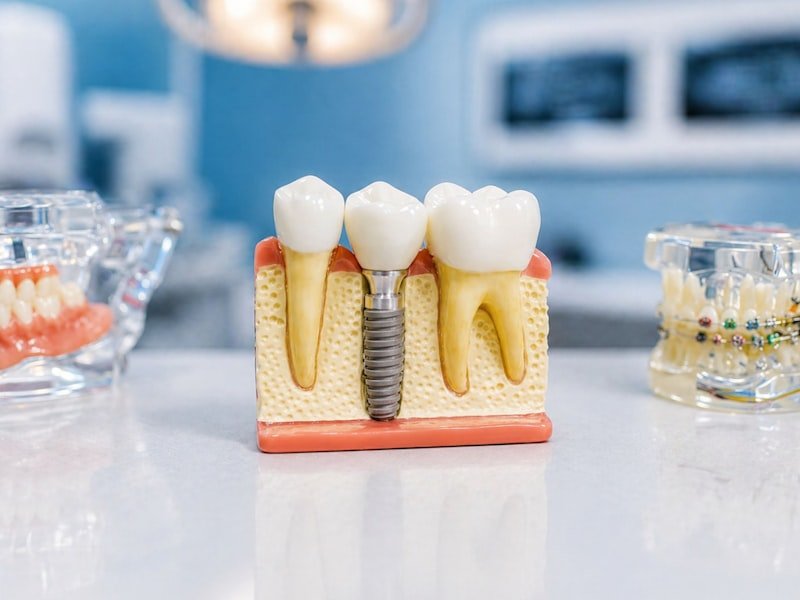
Implants vs bridges: the short answer
If the teeth next to the gap are healthy and you have enough bone, an implant is often the more conservative long-term option, because it replaces the missing tooth without touching its neighbours. If the neighbouring teeth already need crowns, if surgery is not suitable for you, or if you need the gap closed within a single short trip, a bridge can be a sensible choice.
Neither is right for everyone. The decision depends on the health of the adjacent teeth, the amount of bone, your general health, how you clean your teeth and how much time you have. Your dentist decides what is possible after an examination and X-rays, usually including a 3D scan if an implant is being considered.
Turkey teeth vs implants: two different things
People often search "Turkey teeth vs implants" as if the two were alternatives. They usually are not. "Turkey teeth" is an informal name for crowns or veneers fitted over your own teeth to change how they look; our article on what Turkey teeth are explains the term. Implants replace teeth that are missing or cannot be saved.
So the real question is rarely "crowns or implants?" in general, but tooth by tooth: can this tooth be kept and restored, and if it is lost, how should the gap be filled? A full smile plan may include all three: veneers or crowns on teeth that are sound, a bridge in one place and an implant in another. When most teeth in a jaw are missing or failing, full-arch options such as All-on-4 and All-on-6 come into the picture instead.
How each one works
A dental implant is a small screw-shaped post, usually titanium, placed into the jawbone where the root used to be. Over the following weeks and months the bone bonds to its surface. A connecting piece called an abutment is then attached and a crown is fitted onto it. Each implant stands on its own. Our page on dental implants in Turkey describes the treatment in detail.
A conventional bridge uses the teeth on either side of the gap as supports. Those teeth are reshaped and covered with crowns, and the false tooth, called a pontic, is joined between them as one piece. A bridge is cemented in place and is not removed for cleaning. You can read more on the dental bridge page.
Two other forms are worth knowing:
- Resin-bonded bridge. A false tooth with a thin wing bonded to the back of a neighbouring tooth, needing little or no reshaping. It is mainly used for front teeth with a light bite.
- Implant-supported bridge. Two or more implants support a bridge spanning several missing teeth, so three missing teeth in a row may need only two implants.
Neighbouring teeth
This is often the deciding factor. A conventional bridge needs the teeth either side of the gap to be prepared for crowns, which removes a significant amount of enamel and sometimes dentine all round each tooth. If those teeth are healthy and unfilled, that is a real cost: they will need crowns for the rest of their life, and preparing a tooth carries a small risk of irritating the nerve, which may later need root canal treatment.
If the neighbouring teeth already have large fillings or old crowns, the balance changes. Crowning them may be sensible anyway, and a bridge then restores those teeth and fills the gap in one piece of work.
An implant does not rely on the neighbouring teeth at all. That independence also means that if one implant has a problem, the teeth around it are not involved, whereas a problem with one supporting tooth of a bridge can affect the whole bridge.
Bone loss after losing a tooth
When a tooth is lost, the bone that held it is no longer stimulated by chewing and gradually shrinks, in height and width. The change is fastest in the first months after extraction and continues more slowly afterwards.
- Implants transmit chewing forces into the bone, which helps maintain the bone around them. They need enough bone to be placed in the first place; where it has already shrunk, a bone graft or, in the upper back jaw, a sinus lift may be needed first.
- Bridges sit above the gum and do not load the bone under the false tooth, so the bone there can continue to shrink slowly over time. This can leave a small space or shadow under the pontic, which matters most at the front of the mouth.
If you have recently lost a tooth or are about to have one removed, ask about the options before or at the extraction, because the timing affects how much bone is available later.
Cleaning and daily care
Both need careful daily cleaning, but in different ways.
- Implant: brushed and flossed much like a natural tooth. An interdental brush around the base helps. The main long-term risk is inflammation of the gum and bone around the implant, called peri-implantitis, which is linked to plaque, smoking and gum disease history.
- Bridge: because the teeth are joined, ordinary floss cannot pass between them. You clean under the pontic with a floss threader, special floss or small interdental brushes. Decay at the edge of a supporting crown is one of the commonest reasons bridges fail, so this cleaning matters.
Whichever you choose, regular check-ups and hygiene visits at home are important. Our page on teeth cleaning explains what a professional clean involves.
Lifespan, time and suitability
Both treatments can last many years. In general terms, the dental literature reports that well-maintained conventional bridges commonly last ten to fifteen years or more, and that implants placed in suitable patients often remain in function for longer, although the crown on an implant may need replacing over time. Lifespan in any one mouth depends on cleaning, smoking, grinding, gum health and general health. No dentist can promise a set number of years.
| Dental implant | Conventional bridge | |
|---|---|---|
| Neighbouring teeth | Not touched | Reshaped for crowns |
| Surgery | Yes, under local anaesthetic | No |
| Bone under the gap | Helps preserve it | Can continue to shrink |
| Typical time | Usually 3–6 months of healing before the final tooth, often two trips | Often about a week in one trip |
| Cleaning | Like a natural tooth | Threaders or interdental brushes under the pontic |
| Needs enough bone | Yes, or grafting first | No |
Implants may be postponed or unsuitable for people with uncontrolled diabetes, heavy smoking, untreated gum disease, some medications affecting bone, or recent radiotherapy to the jaw. Immediate implants, with a temporary tooth placed on the same day, are only possible when bone and gum conditions allow; our page on same-day implants explains when. Bridges need sound, stable supporting teeth with healthy gums.
Cost structure: how implants and bridges are priced
Implants and bridges are priced differently, so comparing a single number for each can mislead. An implant tooth is built from parts: the implant itself, the abutment, the crown and anything needed beforehand, such as an extraction, bone graft or sinus lift. A bridge is priced by its units: every supporting crown and every false tooth counts, so a three-unit bridge has three units even though it replaces one tooth. The price list ranges below show the main components.
| Treatment | Price range (TRY) | Approx. GBP | Approx. EUR | Approx. USD |
|---|---|---|---|---|
| Implant, Turkish system (per implant) | 7,000–9,000 | £105–£135 | €125–€160 | $140–$180 |
| Implant, German system (per implant) | 14,000–16,000 | £210–£240 | €250–€290 | $280–$320 |
| Implant, Swedish premium system (per implant) | 28,000–35,000 | £420–£530 | €500–€630 | $560–$700 |
| Zirconia crown (per tooth) | 5,000–7,000 | £75–£105 | €90–€125 | $100–$140 |
| E.max all-ceramic crown (per tooth) | 8,000–12,000 | £120–£180 | €145–€220 | $160–$240 |
Please note: these ranges come from our clinic price list and are shared to help you plan a budget. They are information, not a quote or an offer. The exact cost can only be set after an examination, any X-rays or scans needed, and a written treatment plan. Our list is in Turkish lira; amounts in pounds, euros and dollars are approximate, converted at the European Central Bank rate of 23 October 2026, and change with the exchange rate.
The implant prices are per implant, as in our price list. The written plan lists every part needed for each tooth, including the implant, abutment, crown and any graft or sinus lift, and the cost of a bridge is likewise set in the written plan once the number of units and the material are decided. Over the long term, also think about what may need replacing later and how many teeth each option involves. More detail is on our dental implants cost page.
If you would like a dentist to look at your gap, send photos and any X-rays on WhatsApp and a dentist will reply with a preliminary plan and the expected number of days. At our clinic, implant surgery is carried out by dentists including Dt. Yusuf Yuca, PhD and Dt. Cemal Özdemir, and bridges and crowns are planned by Dt. Osman Cemal Binan, whose work focuses on prosthetic dentistry.
Frequently asked questions
Is an implant or a bridge better for one missing tooth?
Turkey teeth vs implants: what is the difference?
Does a bridge cause bone loss?
How long do bridges and implants last?
How long does each take in Turkey?
Is a bridge easier to clean than an implant?
Can I have an implant if I already have a bridge?
This page gives general information and is not a substitute for an examination. Whether a treatment is suitable for you, and how long it takes, is decided after your dentist has examined you and reviewed your X-rays.