
- Procedure time
- Usually 30–60 minutes per tooth
- Anaesthesia
- Local anaesthetic
- Back to normal routine
- Often after 2–3 days
- Stitches
- Dissolving or removed at about 7–10 days
- Suggested stay
- Several days, so we can check healing before you fly
Do wisdom teeth always need to come out?
No. Wisdom teeth that have come through straight, can be cleaned and meet the opposite teeth properly can stay for life. Removing healthy, symptom-free wisdom teeth "just in case" is no longer standard advice in the UK, and we follow the same thinking.
Removal is usually recommended when a wisdom tooth:
- causes repeated pericoronitis, the painful infection of the gum flap over a partly erupted tooth;
- has decay that cannot be sensibly filled;
- is causing decay or root damage to the second molar in front of it;
- has a cyst or other disease around it;
- is in the way of other planned treatment, for example a bridge or orthodontics.
A tooth that is completely buried in bone and causing no harm is often better left and checked on X-ray from time to time.
Signs that a wisdom tooth may be causing trouble
Problems tend to come and go, which is why many people put off dealing with them until a holiday or work trip is ruined. Common signs include:
- pain or swelling at the very back of the mouth, sometimes spreading to the ear or jaw;
- a bad taste or smell from the gum around a back tooth;
- difficulty opening the mouth fully;
- food constantly trapped behind the last molar;
- a cheek that is bitten repeatedly by an upper wisdom tooth.
Swelling that spreads to the face or neck, difficulty swallowing or a fever needs urgent attention wherever you are; do not wait for a planned trip.
Wisdom tooth removal, step by step
- Before travelling: Send any recent X-ray on WhatsApp so we can say whether removal looks necessary and how complex it may be.
- Examination and X-ray: Free examination and panoramic X-ray in Istanbul, with a 3D scan only if the tooth appears close to the nerve. Written plan and cost.
- Removal: Under local anaesthetic, usually 30–60 minutes per impacted tooth. You leave with gauze, aftercare instructions and any prescription.
- Check-up: A review a few days later to check healing and rule out dry socket before you fly.
- Stitches: Dissolving stitches disappear on their own; others are removed after about a week, in Istanbul or by your local dentist.
Impacted wisdom teeth and the X-ray assessment
An impacted wisdom tooth is one that cannot erupt properly because it is blocked by bone, gum or the tooth in front. It may lean forwards (the most common type in the lower jaw), lie horizontally, lean backwards or stand upright but stay buried.
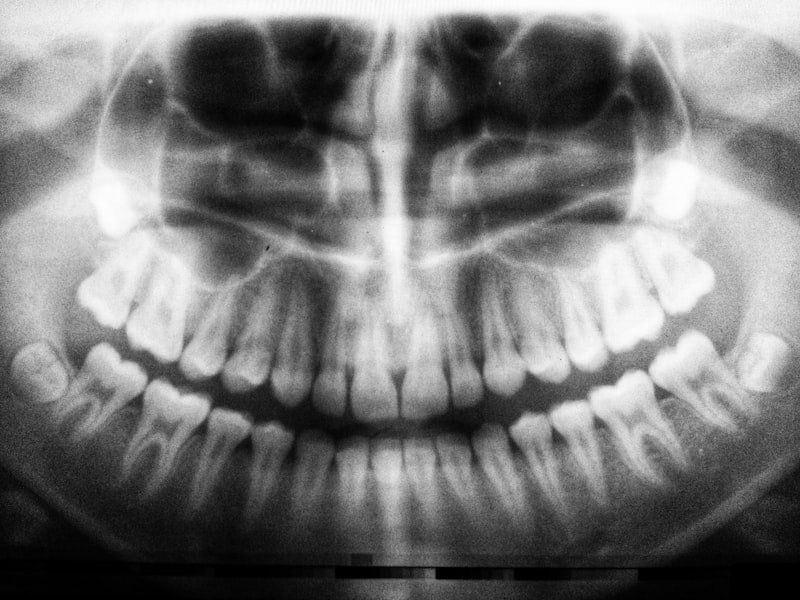
Before deciding anything, the dentist looks at a panoramic X-ray to see:
- the angle and depth of the tooth;
- the shape and number of roots;
- how close the roots are to the inferior alveolar nerve, which gives feeling to the lower lip and chin;
- the condition of the second molar.
If the roots appear to overlap the nerve, a 3D scan may be advised to see the relationship clearly. In a small number of high-risk cases, a coronectomy is an option: the crown is removed and the roots are deliberately left in place, away from the nerve. Sending an existing X-ray on WhatsApp before you travel lets us tell you early whether your case looks routine.
What happens during wisdom tooth removal
The procedure is carried out under local anaesthetic. Once the area is completely numb:
- a small incision is made in the gum if the tooth is not fully visible;
- a little bone may be removed around the crown;
- the tooth is often divided into two or three pieces so it can come out with less force;
- the socket is cleaned and closed with a few stitches.
For a single impacted wisdom tooth, this typically takes 30 to 60 minutes; a fully erupted upper wisdom tooth can take only a few minutes. You will feel pressure and hear some noises, but the anaesthetic should prevent pain. Many people prefer to have the teeth on one side removed together, so they can chew on the other side while healing. Removing all four in one visit under local anaesthetic is possible for some patients, but the recovery is harder; the dentist will advise on what is sensible for you. For the wider range of surgical work we do, see our oral surgery page.
Recovery: the first week, day by day
Recovery after wisdom teeth removal follows a fairly predictable path:
- Day 1: bite on gauze to control bleeding, rest with your head raised, apply a cold pack to the cheek in short spells. Do not rinse, spit forcefully or smoke.
- Days 2–3: swelling and jaw stiffness are usually at their worst. Start gentle warm salt-water rinses after meals from the second day, unless told otherwise.
- Days 4–7: discomfort fades steadily and normal food gradually becomes easier.
- Days 7–10: stitches dissolve or are removed; the gum has largely closed, though the socket continues to fill in for weeks.
Most people return to desk work and sightseeing after two or three days. Avoid strenuous exercise for about a week.
Dry socket: what it is and how to avoid it
Dry socket happens when the blood clot that forms in the empty socket is lost or breaks down too early, leaving bone exposed. It is more common after lower wisdom tooth removal and in smokers. The tell-tale sign is pain that eases at first and then becomes much worse around day two to four, often with a bad taste and pain spreading towards the ear.
To protect the clot:
- do not smoke or vape for as long as possible, at least the first few days;
- avoid drinking through a straw and spitting forcefully;
- do not rinse vigorously on the first day;
- keep your tongue and fingers away from the socket.
Dry socket is not dangerous, but it is painful. It is treated by cleaning the socket and placing a soothing dressing, which usually brings quick relief. Contact us immediately if you suspect it.
What can I eat after wisdom teeth removal?
For the first day, stick to cool or lukewarm soft food: yoghurt, smooth soup that is not hot, mashed potato, scrambled eggs. From the second or third day you can add pasta, soft fish and tender minced meat, including minced or ground turkey, as long as it is moist and chewed on the other side. Leave crunchy, seedy and spicy foods, such as crisps, nuts and chilli, until the socket has closed. Avoid alcohol while taking painkillers or antibiotics.
Flying after wisdom tooth removal
Flying itself does not usually harm a healing socket, but being on a plane when bleeding, swelling or dry socket starts is unpleasant and far from help. We therefore recommend having the extraction early in your stay and flying only after a check-up, usually a few days later. Take painkillers and any prescribed medicines in your hand luggage. Upper wisdom teeth sometimes sit close to the sinus; if the dentist sees a connection, you may be given specific advice about nose-blowing and flying. Read more in flying after dental treatment.
Wisdom tooth removal Turkey cost: what it depends on
The main factor is difficulty: a fully erupted tooth is a much simpler procedure than a horizontally impacted lower tooth sitting deep in bone near the nerve. Cost also depends on how many teeth are removed and whether a 3D scan is needed. Your free examination and X-ray come first, and you receive the plan and total cost in writing before anything is done. You can contact us with an existing X-ray for a preliminary opinion.
Frequently asked questions
How long does wisdom tooth removal take?
How much does wisdom tooth removal cost in Turkey?
Is wisdom tooth removal painful?
Can I fly straight after wisdom teeth removal?
Should all four wisdom teeth be removed at once?
What is the risk of nerve damage?
Can I eat turkey after wisdom teeth removal?
When can I go back to work or the gym?
This page gives general information and is not a substitute for an examination. Whether a treatment is suitable for you, and how long it takes, is decided after your dentist has examined you and reviewed your X-rays.