
What does "Turkey teeth" mean?
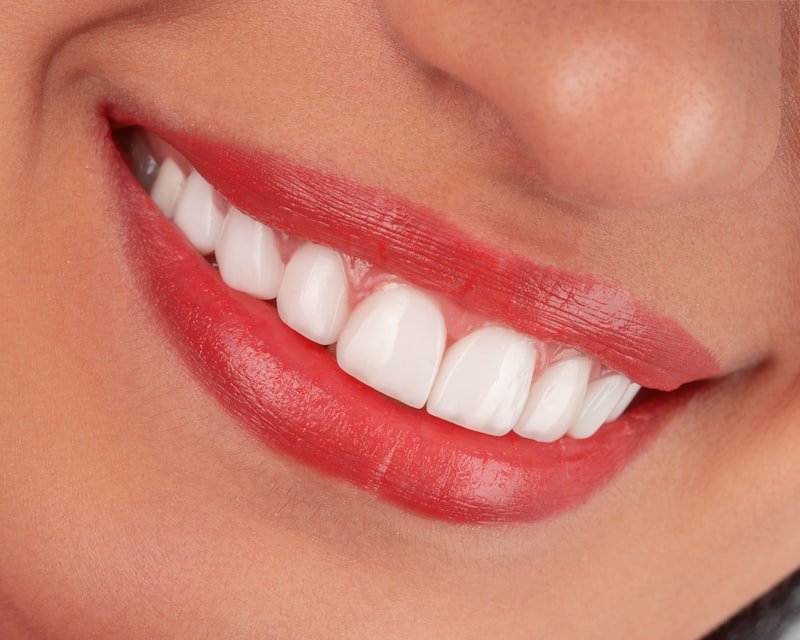
"Turkey teeth" is British slang for a smile that looks obviously artificial: every tooth the same bright, flat white, the same square shape and often a little too long or too thick for the face. The phrase spread through reality television and social media in the early 2020s, when a wave of young people travelled abroad for cosmetic dental work and posted the results.
The name is unfair to the many Turkish dentists who do careful, conservative work, and the same look can be produced in any country. But the worry behind it is genuine. In most of the cases people describe, the problem is not the material or the destination. It is that a large number of sound, healthy teeth were cut down far more than the patient needed, usually without the patient fully understanding what was being done.
The Turkey teeth process: what is usually done
The typical "Turkey teeth" process is a set of full crowns, not veneers. The difference matters, because it decides how much of your own tooth is left afterwards.
- A veneer is a thin shell of porcelain bonded to the front surface of a tooth. Preparation, if any is needed, is usually confined to a thin layer of enamel on the front.
- A crown covers the whole tooth. To make room for it, the dentist reduces the tooth on every side, so what remains is a narrow core, the "stump" or "nub" that people share pictures of.
In the aggressive version of the process, sixteen to twenty or more teeth are reduced for crowns within a day or two, temporary teeth are fitted, and the final crowns go in a few days later. Patients are often told they are getting "veneers" or "zirconia veneers", and only discover they had crowns when a dentist at home looks at an X-ray. If you are unsure which you are being offered, our guide to veneers and crowns compared explains how to tell them apart.
Why filing down healthy teeth causes problems
Removing healthy tooth structure cannot be undone. Once a tooth has been prepared for a crown, it will need a crown for the rest of its life, and every replacement takes a little more away. That is a significant commitment for someone in their twenties.
Heavy preparation also brings the drill closer to the pulp, the living nerve and blood supply inside the tooth. The pulp can become inflamed straight away or, more quietly, months or years later. Some patients notice sensitivity to cold that never settles; others develop an infection that needs root canal treatment through the new crown. When this happens to several teeth in a row, the cost and inconvenience multiply.
Finally, a short stump gives a crown less to hold on to. If a crown later loosens, breaks or the tooth underneath decays, there may be less to rebuild with than there would have been if the tooth had been left alone.
Gum disease and Turkey teeth
Gum problems are one of the most common complaints after a rushed set of crowns. The edge of each crown, called the margin, has to sit snugly against the tooth. When margins are placed deep under the gum, left bulky or do not fit closely, they trap plaque that a toothbrush cannot reach. The gum responds with redness, swelling and bleeding, and over time it can shrink back to show a dark line or the yellower root above the crown.
Gum disease that was already present before treatment is an even bigger risk. Placing crowns or veneers on inflamed gums hides the problem rather than solving it, and the bone that supports the teeth can keep being lost underneath beautiful-looking porcelain. Any sensible plan treats the gums first. If yours bleed when you brush, read about gum disease treatment before thinking about cosmetic work.
Turkey veneers gone wrong: the common signs
When people search for "Turkey veneers gone wrong", the pictures usually show one or more of the following:
- A shade far whiter than the whites of the eyes, which makes teeth look false in daylight and photographs.
- Teeth that are too long, too wide or too thick, pushing the lips forward.
- A bite that no longer meets evenly, leading to jaw ache, chipping or crowns that feel "high".
- Puffy, bleeding gums around the edges of the crowns.
- Gaps or dark triangles between teeth, or food trapping.
- Persistent sensitivity, or a tooth that later becomes painful and needs a root canal.
- A change in speech, such as a slight lisp, from teeth that are thicker behind than before.
Some of these can be corrected with small adjustments, polishing or gum care. Others, such as a shade that is wrong or teeth that are reduced too far, can only be dealt with by replacing the work.
How to get a natural result instead
A natural smile usually involves less treatment, not more. A careful plan works through the gentler options first:
- Health before appearance. Decay and gum problems are treated before anything cosmetic.
- Whitening and bonding where they are enough. Many people who want brighter or more even teeth are well served by teeth whitening or composite bonding, which remove little or no enamel.
- Veneers rather than crowns on healthy front teeth. Porcelain veneers need far less preparation than crowns. Crowns are kept for teeth that are heavily filled, broken or root-treated.
- Only the teeth that show. The number of teeth is decided by your smile line, not by a package.
- A shade that suits you. A natural white has some translucency and slight variation between teeth. The brightest shade on the chart rarely looks right.
- A trial before cutting. A mock-up or temporary version lets you see and approve the shape and length before any permanent change.
Our page on porcelain veneers in Turkey covers how a conservative veneer plan is carried out.
Questions to ask before you agree to treatment
Put these to any clinic, in Turkey or at home, and ask for the answers in writing:
- Are you proposing veneers or crowns on each tooth, and why that choice for that tooth?
- How much of each tooth will be removed?
- Which teeth are healthy enough to leave untouched, and could whitening or bonding achieve part of the result?
- Have you checked my gums and taken X-rays before planning?
- Will I see a trial version of the new shape before my teeth are prepared?
- Who is the dentist doing the work, and can I see their name and qualifications?
- What happens if something needs adjusting after I fly home?
A good clinic will welcome these questions. Vague or impatient answers are a reason to look elsewhere. If you would like a dentist to answer them for your own teeth, you can send us photos or X-rays and ask.
Frequently asked questions
Are Turkey teeth veneers or crowns?
Can Turkey teeth be reversed?
Do Turkey teeth cause gum disease?
How long do Turkey teeth last?
Can you get natural-looking veneers in Turkey?
This page gives general information and is not a substitute for an examination. Whether a treatment is suitable for you, and how long it takes, is decided after your dentist has examined you and reviewed your X-rays.