
- Main types
- Socket preservation, ridge augmentation, block graft
- Anaesthesia
- Local anaesthetic
- Same visit as implant
- Often possible for small grafts
- Healing for larger grafts
- Usually around 4–9 months before the implant
- Materials
- Your own bone, donor, animal-derived or synthetic
- Imaging
- X-rays and usually a 3D scan
Why bone grafts are needed for dental implants
Jawbone exists to hold teeth. When a tooth is lost, the bone that surrounded its root no longer receives the pressure of chewing, and it begins to shrink. Most of this loss happens in the first months after an extraction, and it continues more slowly for years. Gum disease, infections, injuries and difficult extractions can remove bone too.
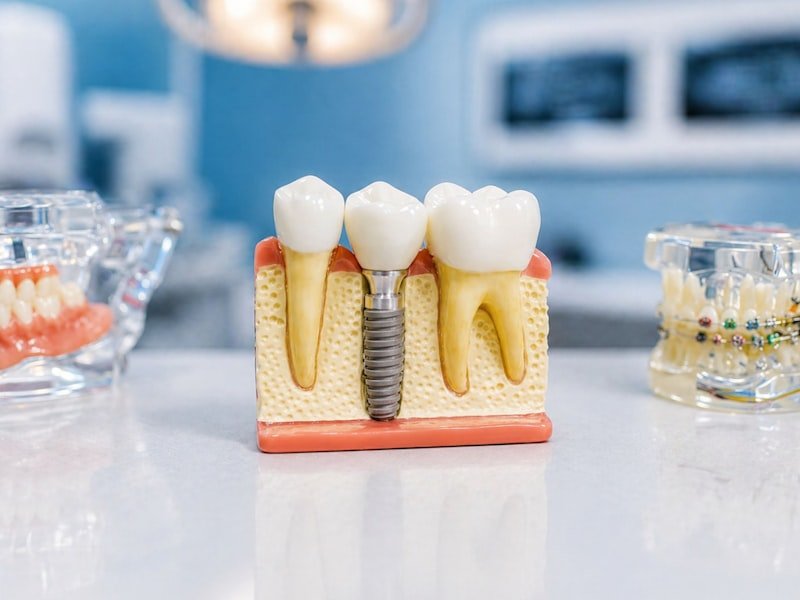
An implant needs a certain thickness of bone all the way round it to bond firmly and to keep the gum stable over it. If the bone is too narrow, the implant can show through the gum or loosen; if it is too low, it may not be long enough to carry a tooth. A bone graft rebuilds the missing part.
A graft does not stay as a foreign piece. It acts as a scaffold that your own bone grows into and gradually replaces, which is why it needs time and why your general health affects how well it heals.
Dental bone graft Turkey: the three main types
Bone grafting covers several procedures of different sizes. In plain words:
Socket preservation
When a tooth is removed, graft material is placed straight into the empty socket and covered, to reduce the shrinkage that would otherwise follow. It is the smallest kind of graft and is often done in the same appointment as the extraction. It is useful when an implant is planned but cannot be placed on the same day.
Ridge augmentation
The ridge is the curved band of bone that teeth sit in. When it has become too thin or too low, graft particles are packed against it and covered with a protective membrane, then the gum is closed over them. This is often called guided bone regeneration. Small amounts can be added around an implant as it is placed; larger amounts are left to heal first.
Block graft
For bigger defects, a small solid piece of bone is shaped to fit and fixed to the jaw with tiny screws. The piece can come from your own body, usually from inside the mouth at the back of the lower jaw or the chin, or from a prepared donor source. Block grafts take longer to heal and involve more swelling.
A fourth procedure, the sinus lift, adds height specifically in the upper back jaw and has its own page.
Bone grafting, step by step
- Before you travel: X-rays: Send your X-rays or a 3D scan on WhatsApp. A dentist replies with a preliminary plan, whether a graft looks likely and how it affects the number of trips.
- Examination and 3D scan: Bone width and height are measured, your medical history is reviewed, and the graft type and material are chosen and written into the plan.
- Graft surgery: Under local anaesthetic the graft is placed, alone or with the implant, covered with a membrane where needed, and the gum is stitched.
- First two weeks: Soft food, careful cleaning and prescribed medicines. Stitches are checked before you fly.
- Healing at home: From around three months for socket preservation to six months or more for larger grafts.
- Implant and final teeth: Once the bone has matured, the implant is placed (if not already) and the final teeth follow after healing.
What is the graft material made of?
Graft materials fall into four groups, and many grafts combine more than one:
| Material | Where it comes from | In plain words |
|---|---|---|
| Autograft | Your own bone, usually from inside the mouth | Heals very well but needs a second small surgical site |
| Allograft | Processed human donor bone from a tissue bank | Avoids a second site; widely used |
| Xenograft | Processed animal bone, most often bovine | Resorbs slowly, which helps keep volume |
| Synthetic | Laboratory-made minerals | No human or animal origin |
Membranes placed over grafts may also be animal-derived or synthetic. If you have religious, ethical or dietary reasons for avoiding particular animal or human-derived materials, tell your dentist before surgery so that the plan can take this into account. The material used is written into your treatment plan.
Can the bone graft and implant be done at the same visit?
Often, yes, when the defect is small. The key question is whether the implant can be held firmly by your own bone while the graft fills the gaps around it. If it can, the graft and implant heal together, which saves a stage and several months.
Same-visit grafting is common when:
- an implant is placed into a fresh extraction socket and the space around it needs filling;
- a thin layer of bone is missing on the cheek side of an otherwise adequate ridge;
- a few threads of the implant would otherwise be exposed.
A staged approach, graft first and implant later, is usually needed when:
- the ridge is too narrow or too low for the implant to be stable at all;
- a block graft is required;
- there is infection at the site that must heal first.
The dentist plans this from a 3D scan, but the final decision can change during surgery once the bone is seen directly. This is also one of the conditions behind same day implants.
Bone graft healing time
Healing time depends on the size of the graft, the material and your health. These are general ranges:
- Socket preservation: usually around three to four months before an implant can be placed, sometimes longer.
- Small graft placed with the implant: the implant normally heals for around four to six months before the final tooth, slightly longer than an implant without a graft.
- Ridge augmentation as a separate stage: often around four to six months before the implant.
- Block graft: often around four to six months, sometimes longer, before the implant; then the implant itself needs a few months.
In the first week expect swelling, some bruising and soreness, and keep to soft food on the other side of the mouth. Stitches are checked or removed after about one to two weeks. The gum over a graft must stay closed while it heals, so avoid pressing on the area with your tongue or a denture unless the dentist has adjusted it.
How bone grafting changes your trips to Istanbul
A graft placed with the implant usually keeps the plan at two trips: one for surgery and one for the final teeth, with a slightly longer gap between them. A staged graft usually means three trips: one for the graft, one for the implant once it has healed, and one for the final teeth.
Where several areas need work, the dentist may combine stages to reduce travel, for example grafting one side while placing implants on the other. You should know before you book whether a graft looks likely. Send your X-rays on WhatsApp; a dentist reviews them and replies with a preliminary plan and the expected number of days for each trip. Our article on how long to stay in Turkey helps with the rest of the planning.
Risks and who heals less predictably
Most grafts heal without trouble, but possible problems include swelling and bruising, infection, the gum opening over the graft so that some particles are lost, a graft that forms less bone than planned, and temporary numbness if work is done near a nerve in the lower jaw. Some grafts need to be topped up at the time of implant placement.
Healing is less predictable in:
- smokers, as smoking reduces blood supply to the graft;
- people with poorly controlled diabetes;
- people who take or have taken bisphosphonates or similar bone medicines, or who have had radiotherapy to the jaws;
- areas with active gum disease, which should be treated first; see gum disease treatment.
At our clinic, grafts are placed by Dt. Yusuf Yuca, PhD and Dt. Cemal Özdemir.
Bone graft cost in Turkey
We do not publish a price for bone grafting, because it ranges from a little material in one socket to a block graft over several teeth. The cost is set in your written treatment plan after examination and imaging, listed separately from the implants, abutments and crowns, so you can see exactly what each part is for. If you have been told elsewhere that you need a graft, bring or send that X-ray or scan; it helps the dentist give a clearer preliminary plan.
Frequently asked questions
Do I need a bone graft for a dental implant?
Can a bone graft and implant be done at the same time?
How long does a dental bone graft take to heal?
What is socket preservation?
What are bone grafts made of?
Does a bone graft add an extra trip to Turkey?
Is bone grafting painful?
This page gives general information and is not a substitute for an examination. Whether a treatment is suitable for you, and how long it takes, is decided after your dentist has examined you and reviewed your X-rays.