
- Time in Istanbul
- Usually two trips of about 5–7 days each
- Healing between trips
- Typically 3–6 months
- Anaesthesia
- Local anaesthetic
- Surgery time
- Roughly 30–60 minutes per implant site
- First consultation
- Free examination, X-ray and written plan
What is a dental implant?
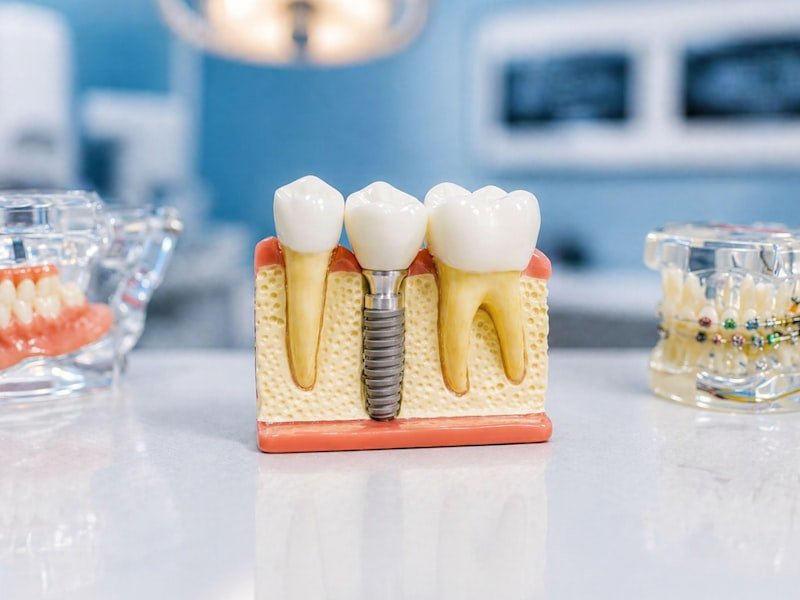
A dental implant is a small screw-shaped post, usually titanium, that is placed into the jawbone where a tooth root used to be. Over the following months the bone grows tightly against its surface, a process called osseointegration. Once that bond has formed, the implant can carry a crown, a bridge or a full set of fixed teeth and take normal chewing forces.
Each implant tooth has three parts: the implant itself in the bone, a connector called an abutment, and the visible crown. Most implants are titanium or a titanium alloy, a metal with a long track record in medicine. Ceramic (zirconia) implants also exist and suit a small number of patients; your dentist will explain whether they make sense for you. Implant systems from different manufacturers are available, and before surgery you should be told which system is planned and why.
How long do dental implants take in Turkey?
For most people, dental implants in Turkey mean two visits to Istanbul, three to six months apart. Anyone offering permanent implant teeth in a single short holiday for every case is skipping the healing stage that implants depend on.
First trip: placement (usually 5–7 days)
You have a full examination and X-ray, we confirm the plan and cost in writing, and the implants are placed under local anaesthetic. Any teeth that need removing are taken out, and you may be given a temporary tooth or denture so you are not left with a gap. A check-up a few days later makes sure the area is settling before you fly home.
Healing at home (typically 3–6 months)
The lower jaw is denser and often heals in around three months; the upper jaw, or any site that needed bone grafting, usually takes longer.
Second trip: the final teeth (usually 5–7 days)
We check the implants, take impressions or a digital scan, try in the new teeth and adjust the bite before fitting the final crowns or bridge. In some suitable cases a fixed temporary can be attached soon after surgery, but whether that is safe depends on how firmly the implant is held in your bone, so it is decided on the day rather than promised in advance.
Your implant treatment, step by step
- Before you travel: free preliminary plan: Send photos and any recent X-rays on WhatsApp. We reply with a provisional plan explaining how many implants are likely and whether grafting may be needed.
- Trip 1, day 1: examination: Free examination and X-ray at the clinic, a medical history review and your confirmed treatment plan and total cost in writing.
- Trip 1, days 2–3: implant surgery: Extractions if needed and implant placement under local anaesthetic. You receive written aftercare instructions and medication if prescribed.
- Trip 1, final days: check-up: We check healing and fit any temporary teeth before you fly home.
- At home: healing: Typically three to six months while the implants bond with the bone. We stay in touch on WhatsApp.
- Trip 2: final crowns or bridge: Impressions or a scan, a try-in, bite adjustments and fitting of the final teeth over about five to seven days.
One tooth, several teeth or a full arch?
The number of implants you need is not always the same as the number of missing teeth. Implants can share the load of a bridge, so three missing teeth in a row are often restored with two implants.
| Situation | Typical approach | What to know |
|---|---|---|
| One missing tooth | One implant with one crown | Neighbouring teeth are left untouched |
| Several teeth missing side by side | Two or more implants carrying a bridge | Fewer implants than teeth, depending on bone and bite |
| All teeth missing or failing in one jaw | A full-arch bridge on four to six implants | See All-on-4 and All-on-6 |
| Loose lower denture | Two or more implants with a snap-on denture | A removable option explained on our dentures page |
The crowns on top are usually zirconia or porcelain fused to a supporting structure; our page on zirconia crowns explains that material in more detail.
Bone grafting and sinus lifts: when are they needed?
An implant needs enough bone around it to stay stable. After a tooth is lost, the bone in that area slowly shrinks, so people who have been missing teeth for years, or who have had gum disease, sometimes do not have enough width or height left.
- Bone grafting adds graft material to rebuild a thin ridge. Small grafts are often done at the same time as the implant; larger ones may need several months to mature before implants go in, which can add a trip.
- A sinus lift applies to the upper back teeth, where the maxillary sinus sits just above the roots. The sinus floor is gently raised and bone material placed beneath it, creating room for an implant.
We can only tell whether you need either procedure after seeing an X-ray, and sometimes a 3D scan. If you send a recent X-ray on WhatsApp, the preliminary plan will say whether grafting looks likely, so the timeline and cost are not a surprise on arrival.
Who is not a good candidate for implants?
Most healthy adults can have implants, but some conditions raise the risk of failure or complications.
- Smoking: smokers have noticeably higher implant failure rates and slower healing. We strongly advise stopping, ideally for several weeks before and after surgery.
- Uncontrolled diabetes: well-managed diabetes is usually not a barrier, but high blood sugar impairs healing and raises infection risk. Bring a recent blood test result.
- Bisphosphonates and similar bone drugs: medicines taken for osteoporosis or cancer can, rarely, cause a serious jaw-bone healing problem after surgery. Intravenous treatment carries a higher risk than tablets. Tell us about these drugs even if you stopped them years ago.
- Radiotherapy to the head and neck, active gum disease or untreated decay need to be dealt with or assessed first.
- Pregnancy: elective implant surgery is postponed.
- Young patients whose jaws are still growing usually wait until growth has finished.
Your full medical history is reviewed before any surgery is booked. If implants are not right for you, we will say so and discuss alternatives.
Dental implants Turkey cost: what does it depend on?
We do not publish a single price because two implant cases are rarely alike. The cost of dental implants in Turkey depends mainly on:
- how many implants are needed, which is not always the number of missing teeth;
- the implant system chosen;
- the type of crown or bridge on top;
- extractions, bone grafting or a sinus lift;
- whether temporary teeth are needed between trips.
Many patients look abroad because treatment in Turkey usually costs less than at home, and that is a fair reason. What protects you is getting the whole plan in writing before you book flights. Send photos and any X-rays on WhatsApp and we will send a free preliminary plan; after your free examination in Istanbul you receive the confirmed treatment plan and total cost in writing, with no obligation to go ahead. Travel planning is covered on our dental tourism page.
Reviews, Reddit and forums: how to judge an implant clinic
Searches for dental implants Turkey reviews and Reddit threads are full of both delighted and unhappy patients. Online stories rarely say what was planned or why something went wrong. These questions are a better test of any clinic, including ours:
- Did they ask for an X-ray before quoting? A firm quote for implants without seeing your bone is guesswork.
- Will they name the implant system and give you its details afterwards, so a dentist at home can source compatible parts?
- Who places the implants, and can you read that dentist's background?
- Is healing time respected, or is everything promised in one short stay?
- Is the plan written, with each procedure listed?
- What happens if something needs attention after you go home?
Our implant surgery is carried out by dentists with surgical experience, including Dt. Yusuf Yuca, who holds a PhD in oral and maxillofacial surgery, and Dt. Cemal Özdemir. More on choosing well is in our article on how to choose a dental clinic in Turkey.
Before and after: what changes and what does not
Dental implants Turkey before and after photos usually show the finished crowns, which is the satisfying part. What they cannot show is the months in between. Between trips you may have a gap or a temporary tooth, and some swelling or bruising is normal in the first week after surgery. A well-made implant crown should match the shape and shade of your own teeth; if you want whitening, do it before the crowns are made.
Looking after your implants at home
Implants cannot decay, but the gum and bone around them can become inflamed, a condition called peri-implantitis, which is the most common long-term reason implants fail. Good care is simple and makes a real difference:
- brush twice a day and clean around each implant with interdental brushes or floss;
- use a water flosser if you have a bridge;
- see a dentist or hygienist for check-ups at least once a year and tell them you have implants;
- wear a night guard if you grind your teeth;
- avoid smoking.
If anything feels loose or sore after you return home, contact us on WhatsApp with a photo. Some issues can be checked by a local dentist using your implant details; others may need a return visit, and we will tell you honestly which applies.
Frequently asked questions
How long do dental implants take in Turkey?
How much do dental implants cost in Turkey?
Are dental implants in Turkey safe?
Does implant surgery hurt?
Can I fly home after implant surgery?
How long do dental implants last?
I smoke. Can I still have implants?
What happens if an implant fails?
This page gives general information and is not a substitute for an examination. Whether a treatment is suitable for you, and how long it takes, is decided after your dentist has examined you and reviewed your X-rays.