
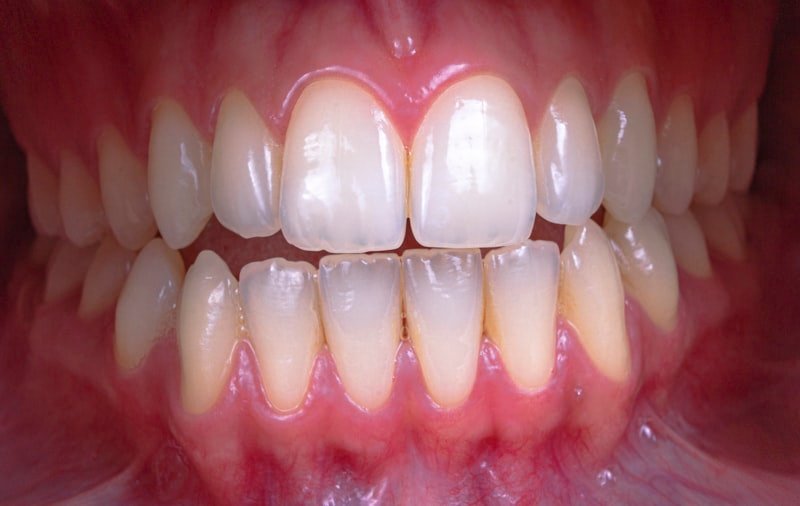
Why Turkey teeth go wrong: four common causes
Most problems with crowns and veneers, wherever they were made, trace back to four causes: over-preparation, rushed timelines, untreated gum disease and a poorly adjusted bite. They often appear together, because a plan that is rushed tends to skip the gum treatment, and a plan that crowns every tooth tends to leave little time for bite adjustments.
It helps to know that these are not mysterious failures. They are known risks of restorative dentistry, described in dental textbooks and seen by dentists in every country. Understanding them makes it easier to spot them in a treatment plan before you agree, and to recognise early signs afterwards. This article looks at each cause, the signs to watch for and what to do. For the general question of choosing a clinic, see is dental treatment in Turkey safe?
Over-preparation of healthy teeth
Over-preparation means removing more of a tooth than the treatment needs, typically when sound teeth are reduced for full crowns where veneers or bonding would have worked. It is the cause most closely linked to the "Turkey teeth" nickname.
Why it matters:
- The pulp (the nerve inside the tooth) sits closer to the surface after heavy preparation, so it can become inflamed, sometimes immediately and sometimes years later.
- A short, narrow stump gives a crown less to grip, so crowns are more likely to loosen.
- The enamel cannot grow back. A crowned tooth will need a crown for life, and each replacement removes a little more.
The safeguard is simple to describe: use the least invasive treatment that solves the problem, and plan preparation through a mock-up so only the amount the design needs is removed. Our Turkey teeth vs veneers guide shows how to check which treatment a plan is offering.
Rushed timelines
A rushed timeline is a problem because it removes the steps that catch mistakes. In a careful sequence, the gums are treated and allowed to settle, a mock-up is approved, the teeth are prepared, temporaries are worn, the work is tried in and adjusted, and the bite is checked again after fitting. Each step is a checkpoint.
When extensive work is squeezed into very few days, several things tend to happen. Scans are taken while the gums are still bleeding, so the margins are less accurate. There is no time to send a restoration back to the laboratory if the shade or fit is wrong. And the bite is checked only once, while the patient is still numb and tired. The result may look acceptable on the day of fitting and show problems weeks later.
Realistic times for common treatments are set out in our guide to the Turkey teeth procedure step by step. A spare day or two in your trip is one of the most useful protections there is.
Untreated gum disease
Placing crowns or veneers on inflamed gums is one of the most common reasons work fails early. Gum disease often causes no pain, so many people do not know they have it. Signs include gums that bleed when you brush, redness, bad breath, and gums that have started to pull back.
If restorations are fitted on top of active gum disease, the inflammation continues underneath them. The gum can recede and expose the edges of the crowns, bone support can keep being lost, and teeth that looked fine at fitting may later become loose. Untreated gum disease is also a risk for implants, because the same bacteria can cause infection around them.
The safeguard is a gum assessment at the examination, with measurements where needed, and gum treatment completed before cosmetic work. This can add time to the plan, but it changes the long-term outcome far more than the choice of ceramic.
A poorly adjusted bite
Your bite is the way your upper and lower teeth meet, and new teeth change it. If a set of crowns is made slightly too long, too thick or at the wrong angle, some teeth take far more load than they should. Over time this can cause chipping, crowns that come loose, sore teeth, jaw ache, headaches or clicking in the jaw joint.
People who grind or clench their teeth are at higher risk, because their teeth are under heavy load at night. The safeguards are a bite assessment before planning, careful adjustment at fitting in every direction of movement, a review after a few days once the anaesthetic has worn off, and a night guard for anyone who grinds.
Warning signs to watch for
Some discomfort is normal after new crowns or veneers. The table below separates what usually settles from what should be checked.
| When | Usually normal | Worth having checked |
|---|---|---|
| First week | Mild gum soreness, some sensitivity to cold, teeth feeling bulky | Severe or throbbing pain, swelling of the face, a bite that feels clearly high |
| First months | Sensitivity fading, speech returning to normal | Sensitivity getting worse, gums that bleed every day, food trapping, jaw ache |
| Later years | Slight shade difference with natural teeth | A dark line at the gum, a loose crown, chips, a bad taste or swelling near a tooth or implant |
Pain that wakes you, swelling, fever or a bad taste can be signs of infection in the nerve of a tooth or around an implant, and need prompt attention. Gum bleeding that does not settle with good cleaning suggests the margins or the gums need assessment. For the day-to-day picture, see our Turkey teeth aftercare guide.
What to do if your Turkey teeth go wrong
If you think something is wrong, take it one step at a time. Most problems are easier to deal with early.
- Deal with anything urgent locally. Swelling of the face or under the jaw, fever, bleeding that will not stop or pain that painkillers do not control need a dentist or doctor near you, the same day if possible.
- Write down what is happening. Note when it started, which tooth, and what makes it better or worse.
- Take clear photos in daylight, lips pulled back, from the front and each side, plus a close-up.
- Contact the clinic that did the work with the photos and your notes, and ask what they advise.
- Book an examination with a local dentist, taking your treatment plan, X-rays and a note of the materials used. A local X-ray can show decay or infection that photos cannot.
- Understand the options before deciding. Depending on the cause, these range from polishing or a bite adjustment, to gum treatment, root canal treatment, rebonding a restoration, or remaking one or more teeth.
Try not to rush into replacing a whole set at once. Many problems involve one or two teeth, and fixing those first, once the gums are healthy, often gives a better outcome than starting again everywhere.
How a careful plan avoids these problems
Each of the four causes has a matching safeguard that can be written into a plan:
| Cause | Safeguard in the plan |
|---|---|
| Over-preparation | Least invasive option per tooth; mock-up before any preparation; reason given for every crown |
| Rushed timeline | Realistic number of days; try-in before fitting; spare day for adjustments |
| Untreated gum disease | Gum assessment at examination; gum treatment first; scans taken on healthy gums |
| Poor bite | Bite and grinding assessed beforehand; adjustment at fitting; review visit; night guard where needed |
At Beyaz Gülüş, treatment is planned after an examination and the X-rays needed, and the written plan lists each tooth with its treatment, material and the number of days. You can begin by sending photos and any X-rays on WhatsApp; a dentist reviews them and replies with a preliminary plan. Our team includes dentists working in prosthetic dentistry, such as Dt. Osman Cemal Binan, and in root canal and restorative dentistry, such as Dt. Berke Erdal.
Frequently asked questions
What are the most common Turkey teeth problems?
Can Turkey teeth gone wrong be fixed?
Why do my gums bleed around my new crowns?
Is it normal for Turkey teeth to hurt months later?
What should I do first if my veneers or crowns go wrong?
How can I avoid Turkey teeth going wrong?
Can a local dentist treat problems with Turkey teeth?
This page gives general information and is not a substitute for an examination. Whether a treatment is suitable for you, and how long it takes, is decided after your dentist has examined you and reviewed your X-rays.