
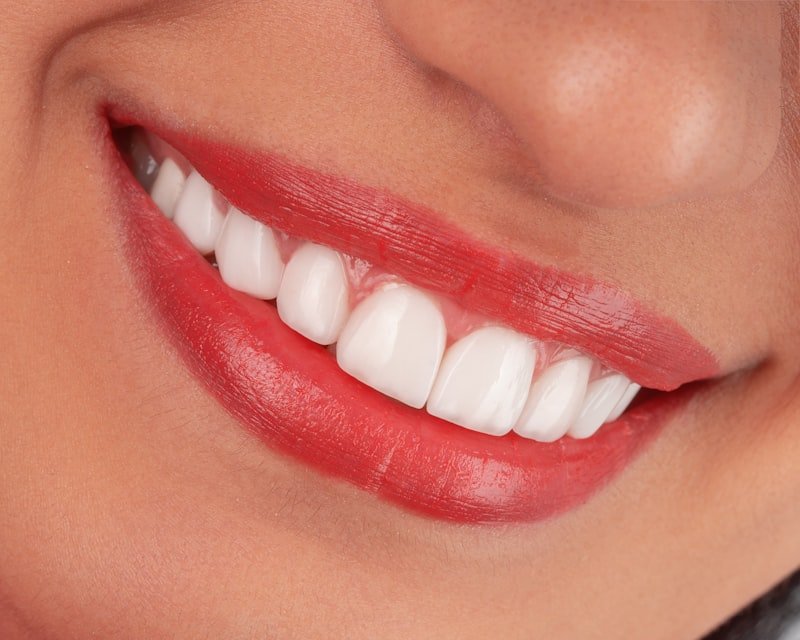
Is it worth getting veneers in Turkey? The short answer
For the right person, yes. Veneers in Turkey are worth considering when you want to change the colour, shape or proportions of healthy front teeth, you have time for a trip of about a week, and you have a dentist at home who will see you afterwards. For someone with untreated gum disease, heavy grinding, a very short holiday window or doubts about the change itself, the answer is usually no, or not yet.
It helps to treat the decision as two separate questions. First: are veneers the right treatment for my teeth at all? Second: if they are, does it make sense to have them made abroad? Many disappointing results come from answering the second question before the first. Our page on veneers in Turkey explains the treatment itself; this article is about the decision.
The real advantages
The main advantage is cost. Private dental treatment in the UK, Ireland and the US is generally more expensive than in Turkey, mostly because of differences in wages, rent and running costs rather than the materials, which are often the same ceramics used worldwide. For a set of six to ten veneers, that difference can be large enough to cover the trip.
The second advantage is time. At home, a set of veneers is often spread over several appointments across weeks. In Istanbul the same steps are usually compressed into one stay, with the dental laboratory working between appointments. Some people find it easier to take one week off than to attend repeated visits around work.
- One plan, one team. Design, mock-up, preparation, try-in and bonding are handled by the same dentists during a single visit.
- Planning from home. You can send photos and X-rays on WhatsApp, and a dentist replies with a preliminary plan and the expected number of days before you book anything.
- Practical help. Our English-speaking team can arrange an airport transfer and help with accommodation.
The real drawbacks
The biggest drawback is distance. If a veneer chips, comes loose or the gum around it becomes sore three months later, the clinic that made it is a flight away. Some problems can be solved by your dentist at home; others need a return visit. Either way there may be costs you had not budgeted for.
- Irreversibility. Most porcelain veneers need a thin layer of enamel removed. Once that is done, the teeth will always need a veneer or another covering. This is true wherever you have them, but a holiday atmosphere can make the decision feel lighter than it is.
- Less time to live with the design. At home you might wear temporaries for a few weeks. On a trip you have days, so the mock-up stage carries more weight.
- Lifetime cost. Veneers do not last forever. Over several decades you should expect to replace some or all of them, and that replacement may happen at home, at home prices.
- Travel after treatment. Sensitivity, a tender bite or swollen gums are easier to deal with when your dentist is nearby. Our article on flying after dental treatment covers the practical side.
None of these is a reason to avoid treatment abroad, but each should be part of the calculation, not a surprise afterwards.
Veneers Turkey price per tooth: what the numbers mean
Veneers are priced per tooth, so the total depends mostly on how many teeth are treated. Our price list range for an E.max porcelain veneer is shown below.
| Treatment | Price range (TRY) | Approx. GBP | Approx. EUR | Approx. USD |
|---|---|---|---|---|
| E.max porcelain veneer / laminate (per tooth) | 12,000–18,000 | £180–£270 | €220–€320 | $240–$360 |
| Teeth whitening (per treatment) | 4,000–10,000 | £60–£150 | €70–€180 | $80–$200 |
Please note: these ranges come from our clinic price list and are shared to help you plan a budget. They are information, not a quote or an offer. The exact cost can only be set after an examination, any X-rays or scans needed, and a written treatment plan. Our list is in Turkish lira; amounts in pounds, euros and dollars are approximate, converted at the European Central Bank rate of 23 October 2026, and change with the exchange rate.
As an example only: 8 veneers at the listed range would come to roughly TRY 96,000–144,000 (about £1,440–£2,170). To judge whether the trip is worth it, add flights, accommodation, time off work and a sensible reserve for follow-up care at home, then compare that total with written plans from home, not with headline prices. A detailed breakdown is on our veneers in Turkey cost page.
Who veneers in Turkey usually suit
Veneers abroad tend to work well for adults whose teeth are basically sound and whose goals are cosmetic. Typical good candidates have:
- healthy gums, or gum problems that have already been treated and are stable;
- enough enamel on the front teeth for the veneers to bond to;
- concerns such as discolouration that whitening cannot fix, worn or chipped edges, small gaps, or teeth that are uneven in size;
- a bite that is broadly stable, and no uncontrolled grinding;
- the flexibility to stay the full number of days the plan needs, and ideally a little longer;
- a dentist or hygienist at home for regular check-ups.
It also matters what you want the result to look like. People who want their own smile, a little brighter and more even, are generally easier to satisfy than people who want a dramatic, uniform white. If you are drawn to a very bright shade, our guide to the Turkey teeth colour chart explains why the lightest shades often look artificial.
When it is better to stay at home, or wait
Sometimes the most useful advice is not to travel yet. It is usually wiser to have treatment at home, or to postpone veneers, if any of the following apply:
- Active gum disease or decay. These need treatment and time to settle first. Veneers placed on inflamed gums can look poor at the edges within months.
- Heavy grinding or clenching that has not been addressed. Thin porcelain is vulnerable to repeated heavy forces.
- Significant crowding or a bite problem. Orthodontics first, for example clear aligners, often allows much less tooth preparation later, and that takes months.
- Only a small problem. One chipped tooth or mild staining may be better solved with composite bonding or whitening, neither of which needs a long trip.
- A trip that is too short. If you can only manage three or four days, the plan will be squeezed, and squeezed plans are where mistakes happen.
- Uncertainty. If you are not sure you want an irreversible change to healthy teeth, wait until you are. Nothing about veneers is urgent.
Questions to ask before you say yes
Our veneers page lists the basic questions about X-rays, enamel removal, the mock-up and who does the work. These are further questions that help you judge whether the trip itself makes sense:
- Why this number of teeth? Ask the dentist to show, on your photos, which teeth appear when you smile and talk, and why each one is included.
- Which material, and why for my teeth? E.max, feldspathic porcelain and composite each have a place. Our comparison of zirconia and E.max is useful background.
- Is anything needed first? Fillings, gum treatment or whitening can add days. You want to know before booking flights.
- Is there a try-in before bonding? Seeing the veneers in your mouth before they are fixed is your last chance to change shape or shade.
- What records will I take home? A written plan, the shade and material used, and copies of X-rays help your dentist at home.
- What does the written plan include? Temporaries, a night guard if you need one, and follow-up checks during your stay should all be listed.
- What if I change my mind at the mock-up? You should be able to say no, or ask for a different design, before any tooth is prepared.
Our article on how to choose a dental clinic in Turkey covers the clinic side of the decision.
A simple way to decide
Write down three numbers: the total from a written plan in Turkey plus travel costs, the total from a written plan at home, and the number of years you hope the veneers will last. Then add the things that are harder to price: how you would handle a problem after you fly back, how much time off you can take, and how sure you are about the change.
If the saving is modest, or the follow-up plan is vague, staying at home is a reasonable choice. If the saving is meaningful, your teeth are healthy and the plan is clear, travelling can make good sense. Either way, the decision is yours. If you would like a dentist's view first, send your photos and any X-rays on WhatsApp and a dentist will reply with a preliminary plan and the expected number of days. Dt. Kadri Söylemez, whose work focuses on smile design, is one of the dentists who plans veneer cases at our clinic, and you can also contact us directly.
Frequently asked questions
Is it worth getting veneers in Turkey?
Do veneers cost less in Turkey than in the UK?
What are the main risks of getting veneers abroad?
How many days do I need in Turkey for veneers?
Who should not get veneers in Turkey?
What happens if a veneer breaks after I get home?
Do veneers need replacing eventually?
This page gives general information and is not a substitute for an examination. Whether a treatment is suitable for you, and how long it takes, is decided after your dentist has examined you and reviewed your X-rays.