
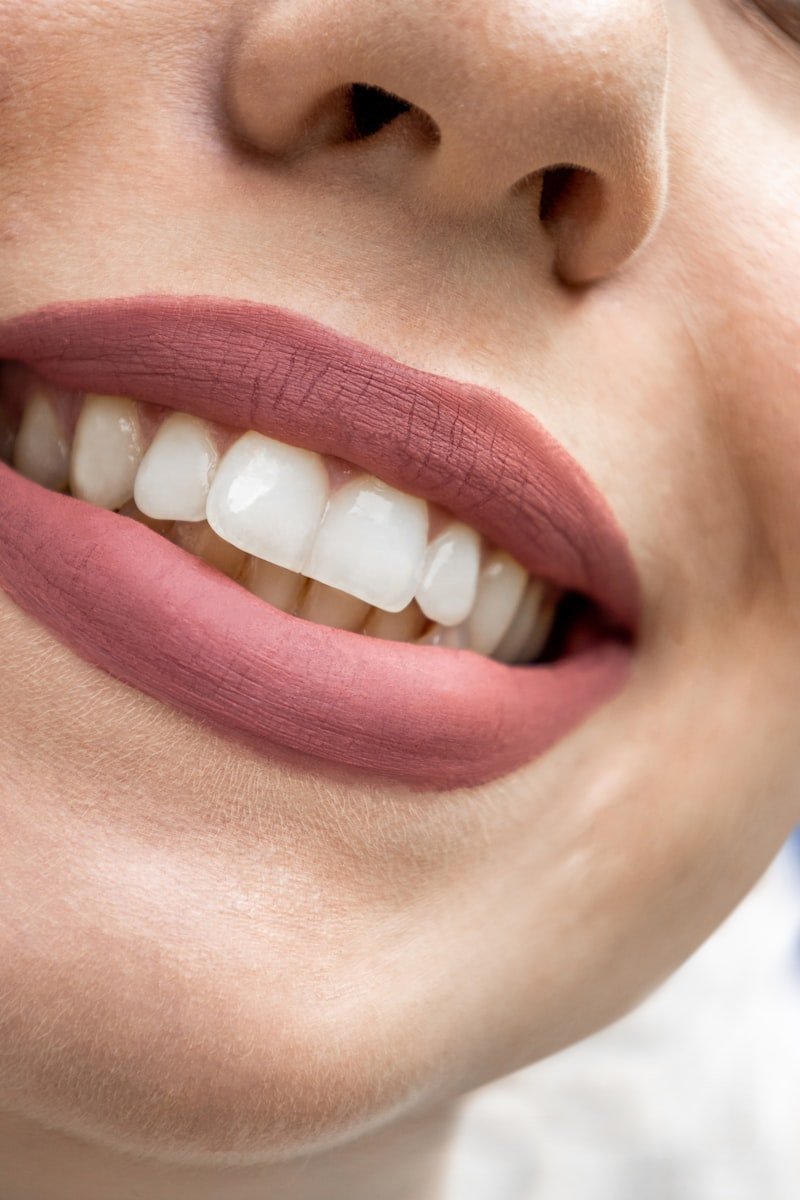
What is the Turkey teeth colour chart?
When people search for a "Turkey teeth colour chart", they are almost always looking for a dental shade guide: a set of small tooth-shaped tabs, each in a slightly different colour, that dentists and dental technicians use to describe and match the colour of teeth. The same guides are used in clinics around the world; there is nothing specific to Turkey about them.
The reason the phrase is linked with Turkey is that many people who travel for crowns or veneers choose a very light shade, and photographs of very white, very uniform smiles have become associated with the term "Turkey teeth". Our article on what Turkey teeth are explains the background. Understanding the shade guide helps you avoid a result that looks whiter than you intended.
How the VITA classical shade guide works
The most widely used guide is the VITA classical shade guide. It has sixteen shades arranged into four groups by hue, the basic colour family, and numbered within each group by how strong, or saturated, the colour is.
| Group | Shades | Colour family |
|---|---|---|
| A | A1, A2, A3, A3.5, A4 | Reddish-brown |
| B | B1, B2, B3, B4 | Reddish-yellow |
| C | C1, C2, C3, C4 | Grey |
| D | D2, D3, D4 | Reddish-grey |
Within each group, a lower number means a lighter, less saturated shade, so A1 is lighter than A3, and B1 is lighter than B3. The A group is the most common among natural teeth, which is why shades such as A2 and A3 come up so often.
The letters do not line up neatly with lightness across groups. When the tabs are arranged purely by brightness, the order the manufacturer suggests runs from B1, the lightest, through A1, B2, D2, A2, C1, C2, D4, A3, D3, B3, A3.5, B4, C3 and A4, to C4, the darkest. That is why a dentist may talk about "value", meaning brightness, as well as the letter and number.
Bleach shades: BL1 to BL4 and beyond
Natural teeth rarely reach the lightest classical shades, and after whitening some people go past them. To describe these colours, many shade guides and ceramic systems include extra "bleach" shades, often labelled BL1 to BL4, that are lighter than B1. Naming varies between manufacturers; some use other codes for the same idea.
- BL4 and BL3 are the less extreme bleach shades, a step brighter than B1.
- BL2 and BL1 are very bright, close to pure white, and lighter than almost any natural tooth.
Bleach shades are not wrong in themselves. They exist because some people whiten their teeth to that level and need crowns or veneers that match. The difficulty comes when a bleach shade is chosen for a whole smile on someone whose skin, eyes and features suggest a softer colour.
Why the whitest shades can look artificial
Natural teeth are not one flat colour. They are slightly more saturated near the gum, lighter and more translucent at the biting edge, and each tooth differs a little from its neighbour. The canines, for example, are usually a touch darker than the central incisors. Our eyes read this variation as "natural" even if we never notice it consciously.
A very white shade on every tooth tends to remove that variation. Several things then make the smile read as artificial:
- No contrast with the face. Very bright teeth can look out of place against the whites of the eyes, which are never pure white, and against most skin tones.
- Opacity. Very light ceramics often look flat and chalky because they let less light through than enamel does.
- Uniformity. Identical colour on every tooth, especially combined with identical shapes, looks manufactured.
- Mismatch with the lower teeth. If only the upper teeth are treated, a very light shade can make the natural lower teeth look yellow by comparison.
- Age. Teeth naturally darken a little over the decades. A shade that suits a twenty-year-old may look conspicuous at sixty.
Many dentists suggest that people who want a bright but believable result look at the lighter end of the classical guide, such as B1, A1 or B2, or the gentlest bleach shades, rather than the very whitest. It is a personal choice, but it is worth seeing the options on your own teeth first.
Choosing your shade in daylight
Shade is most reliably chosen in natural daylight or under lighting designed for colour matching, not under the warm or very bright lights of a bathroom, a hotel room or a dental chair lamp. The same tab can look noticeably different under each.
A few habits help the choice go well:
- Look quickly. The eye adapts within seconds. Glance at the tabs next to your teeth, look away at something neutral, then look again.
- Keep teeth moist. Teeth that dry out during a long appointment look lighter than they really are, so the shade is usually taken early.
- Remove strong colours. Bright lipstick or clothing near the face can distort the comparison.
- Look at the whole face. Use a hand mirror at arm's length and photographs, not only a close-up.
- Check again at the try-in. Crowns and veneers can look different in your mouth than on the tab, so the shade should be reviewed before anything is fixed.
Photographs help too, but phone cameras adjust colour automatically, so a photo is a guide rather than a measurement. A trial smile in temporary material is often the most useful way to judge both shape and colour together.
Whitening before veneers or crowns
If you want your natural teeth lighter, whiten them before any crowns or veneers are made. Porcelain does not respond to whitening, so once the ceramic is made, its colour stays as it is, while your untreated teeth stay as they are too. Getting the order wrong is a common reason for a smile that does not match.
The colour of freshly whitened teeth also settles over the following days, and bonding to enamel immediately after whitening can be weaker. For these reasons, dentists commonly wait a short period after whitening, often around one to two weeks, before taking the final shade and bonding veneers. Your dentist will advise on the timing in your case, which may affect how you plan your trip. Our page on teeth whitening in Istanbul explains what whitening can and cannot achieve.
Matching new work to the teeth you keep
Most people do not have every tooth treated. The new crowns or veneers have to sit beside natural teeth, particularly the lower front teeth and the teeth further back, and match them well enough that the change is not obvious. In practice, that means the shade of the teeth you keep often sets the limit for how light the new work can go.
If you want a larger change than your natural teeth can reach, the options are to whiten the remaining teeth, to treat more teeth, or to accept a slightly softer shade. Treating extra healthy teeth only for colour is a significant step, because most crowns and veneers need some enamel removed. Our guide on veneers versus crowns explains how much each removes.
Questions to ask about shade
Before your shade is chosen, it is reasonable to ask:
- Which shade guide are you using, and what shade are my natural teeth now?
- Which shade do you suggest for me, and why?
- Will the new teeth have any variation, such as a more translucent edge, or one flat colour?
- Should I whiten first, and how long should I wait afterwards?
- Can I see the shade in a trial smile, and again at the try-in before bonding?
- How will the new work match my lower teeth and the teeth I am keeping?
Material affects the result as much as the shade code; our comparison of zirconia and E.max explains why. If you would like a dentist to look at your current shade and goals, send clear daylight photos of your smile on WhatsApp and a dentist will reply with a preliminary plan and the expected number of days. Dt. Kadri Söylemez, whose work focuses on smile design, plans many of these cases at our clinic, and you can also contact us.
Frequently asked questions
What is the Turkey teeth colour chart?
What does A1 mean on a tooth shade chart?
What is the whitest shade for veneers?
Is B1 or A1 whiter?
Should I whiten my teeth before getting veneers?
Why do some veneers look too white?
Can I change the shade after my veneers are fitted?
This page gives general information and is not a substitute for an examination. Whether a treatment is suitable for you, and how long it takes, is decided after your dentist has examined you and reviewed your X-rays.