
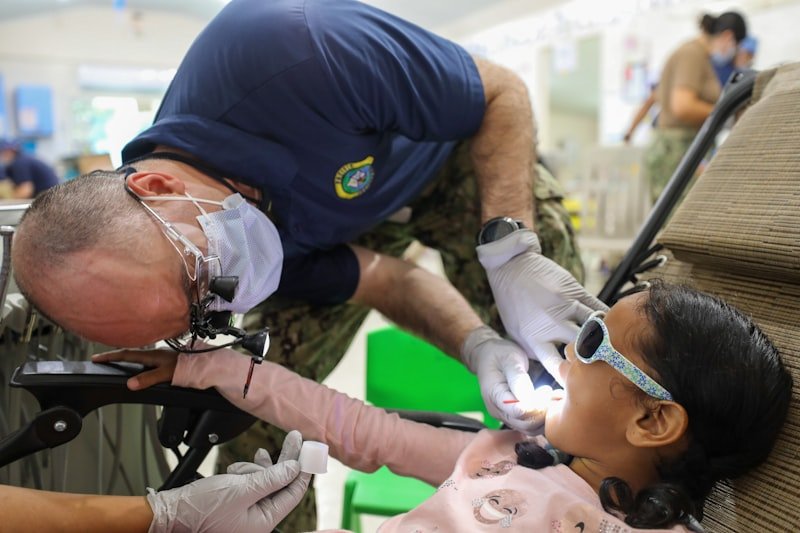
- Ages seen
- From the first tooth onwards
- Check-up length
- Usually 15–30 minutes
- Preventive care
- Fissure sealants, fluoride varnish
- Treatment
- Fillings in baby and adult teeth, urgent care
- Hours
- Monday–Saturday, 09:00–19:00
- First visit
- Free examination
A children's dentist in Istanbul for local and visiting families
Our dentists treat children as part of everyday general dentistry. We are not a dedicated paediatric practice and do not claim a specialist paediatric dentist on the team, but routine children's care, such as check-ups, preventive treatment, fillings and urgent appointments, is something we see regularly. If a child needs specialist care, for example complex treatment under sedation, we will tell you honestly and point you towards the right service.
Families who come to us tend to fall into two groups. Expat families living in Istanbul want a dentist for children in Istanbul who explains things in English and can be seen through school years. Visiting families, often here while a parent has their own treatment, need a check-up or quick help when a tooth starts hurting mid-holiday. Both are welcome. The clinic is on Kennedy Avenue in Zeytinburnu, close to the Marmaray line; our directions page has details.
When should a child first see the dentist?
Ideally when the first tooth appears and no later than the first birthday. That early visit is short and gentle, often with the child on a parent's lap. Its value is in getting the child used to the setting, checking that teeth are coming through normally, and giving parents practical advice on brushing, bottles, night feeds and sugary drinks.
After that, check-ups every six to twelve months are typical, depending on how prone the child is to decay. Around the age of seven it is worth asking for a look at how the jaws and adult teeth are developing; problems such as a crossbite or severe crowding are easier to plan for early, even if braces come later.
Your child's visit, step by step
- Booking: Message us on WhatsApp with your child's age and any concern; we try to give holidaying families an early slot.
- Getting comfortable: A few minutes to meet the dentist, sit in the chair and see the instruments before anything else.
- Check-up: Teeth and gums are examined, with X-rays only if they are genuinely needed.
- Explanation: Parents are told what we found, what can wait and what needs treatment, with options and a written cost.
- Treatment or prevention: Sealants, fluoride or fillings may be done the same day or at a separate visit.
- Home advice: Practical tips on brushing, toothpaste amount and snacks to keep teeth healthy.
Fissure sealants: protecting the back teeth
Fissure sealants are thin, protective coatings painted into the deep grooves on the biting surfaces of the back teeth. Those grooves are often narrower than a toothbrush bristle, so food and bacteria settle there, and that is where most decay in children starts.
Sealants are usually applied to the first permanent molars soon after they come through, at around six or seven, and to the second permanent molars at around twelve. Baby molars can be sealed too if a child is at high risk. The process is quick and needs no injection or drilling: the tooth is cleaned and dried, a gel prepares the surface, the sealant is painted on and set with a curing light. Sealants can wear or chip over the years, so they are checked at each visit and topped up when needed.
Fluoride varnish and toothpaste
Fluoride strengthens enamel and helps reverse the earliest stages of decay. Fluoride varnish is a sticky coating painted onto the teeth in a minute or two; it sets on contact with saliva. UK guidance recommends it at least twice a year for children from age three, and more often for those at higher risk.
At home, the amount of toothpaste matters more than the brand. For children under three a smear of fluoride toothpaste is enough; from three to six, a pea-sized amount. Encourage children to spit out after brushing rather than rinse with water, and supervise brushing until about seven or eight, when most children have the dexterity to do it properly. Teenagers who build up tartar, or who wear braces, benefit from a regular scale and polish as well.
Fillings in baby teeth: why they matter
Parents often ask whether a filling in a baby tooth is worth doing when it will fall out anyway. In most cases it is. Back baby teeth stay in until around ten to twelve, they hold space for the adult teeth beneath, and decay in them can cause pain, infection and abscesses that disrupt sleep, eating and school.
Small cavities are filled with tooth-coloured materials after numbing the area. Where decay is very close to the nerve, a baby tooth may need a small nerve treatment and a protective crown, or, if it cannot be saved, removal. If a back baby tooth is lost early, a space maintainer may be suggested so neighbouring teeth do not drift into the gap. Very early decay, sometimes seen as chalky white patches, can often be stopped with fluoride and diet changes without any drilling.
Calming anxious children
Many children are nervous at the dentist, especially somewhere new and in a different country. We go at the child's pace. A few approaches help:
- Tell, show, do. We explain each step in simple words, show the instrument (the "tooth counter", the "water squirter"), let the child touch it, and only then use it.
- Short first visits. A ride in the chair and a count of the teeth can be enough for a first appointment.
- Parents in the room for younger children, staying calm and positive.
- Stop signals. Older children can raise a hand to pause, which gives them a sense of control.
At home, avoid words like "hurt" or "needle" and do not use the dentist as a threat. Keep it matter-of-fact. Morning appointments often go better than late afternoon, when children are tired.
Dental emergencies on holiday in Istanbul
Toothache, a fall in the playground or a hotel pool accident can happen on any trip. Contact us on WhatsApp on +90 544 835 52 61 and we will offer the earliest appointment we can during opening hours. Some first steps while you get help:
- Knocked-out baby tooth: do not try to put it back, as this can harm the adult tooth developing underneath. Control bleeding with gentle pressure on clean gauze and have the mouth checked.
- Knocked-out adult tooth: this is urgent. Hold it by the crown, not the root, rinse briefly in milk or saline if dirty, and if possible put it gently back in its socket. Otherwise keep it in milk and get to a dentist within the hour.
- Chipped or broken tooth: keep any fragment in milk or water and come in; a fragment can sometimes be bonded back.
- Toothache or swelling: give pain relief suitable for the child's age and weight. Swelling of the face with fever, or swelling near the eye, needs urgent medical attention.
Any head injury with drowsiness, vomiting or loss of consciousness needs a hospital emergency department first, not a dentist. Our contact page lists every way to reach us.
Frequently asked questions
Do you have a pediatric dentist in Istanbul?
At what age should my child first visit the dentist?
Can you see my child urgently while we are on holiday?
Are fissure sealants worth it?
Should baby teeth with holes be filled?
My child is very scared of the dentist. What can we do?
What does the cost of children's dental treatment depend on?
This page gives general information and is not a substitute for an examination. Whether a treatment is suitable for you, and how long it takes, is decided after your dentist has examined you and reviewed your X-rays.